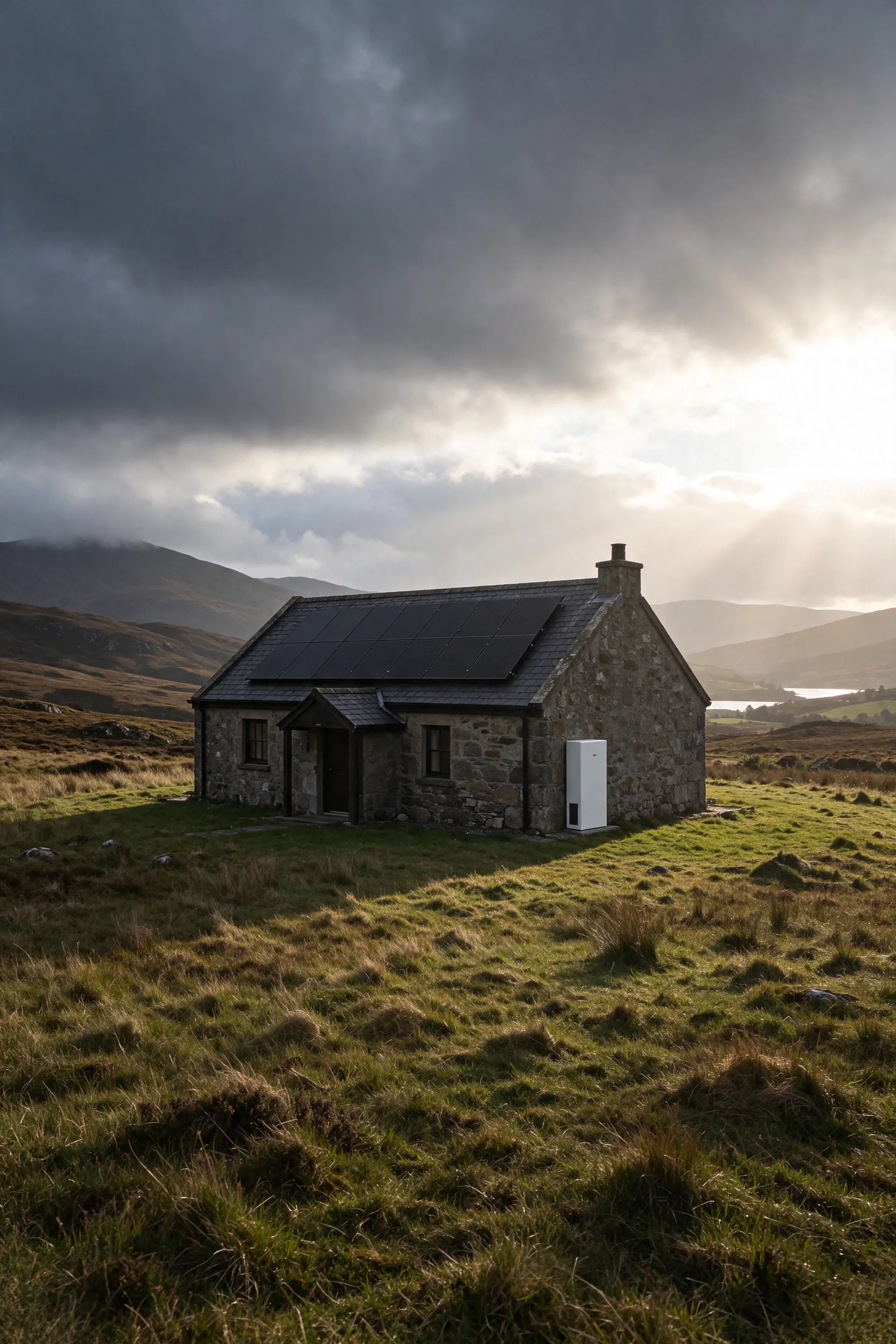
Book a No-Obligation Solar Survey in Lochaber
What we check and what happens after — honest, no pressure
A solar survey is the first step to getting panels on your roof. We visit your property, assess your roof and electrical setup, and give you a written quote within 24 hours. There is no obligation to proceed. Interest-free credit up to £30,000, subject to status. Call 0141 230 0198 to book directly.
Last updated: 5 November 2026
What a home survey in Lochaber checks
A solar survey is a thorough assessment of your property to determine whether solar panels are suitable, what size system you need, and what the installation would involve. Every Lochaber home is different — from granite terraces in Fort William to croft houses in Ardnamurchan — so the survey is specific to your building, your roof, and your energy usage. Here is what we check during a typical survey visit.
Roof condition and orientation
We assess your roof structure, pitch, and orientation. South-facing roofs generate the most electricity, but east and west-facing roofs are still productive in Scottish summers with 16-plus hours of daylight. We check the condition of your slates or tiles, the underlying structure, and whether the roof can support the weight of panels. For older properties, we look at whether reinforced mounting is needed. We also assess whether in-roof systems — where panels sit flush with the slate — are appropriate, which is often preferred in conservation areas like Glencoe village.
Shading from hills, forestry and buildings
Lochaber properties often face shading from surrounding terrain. Ben Nevis casts shadows across Fort William, the Mamores shade Kinlochleven, and the Glencoe mountains block light at low angles in winter. We map shading patterns across the day and across the year to model actual generation, not theoretical maximums. Forestry plantations, neighbouring buildings, and chimneys are also assessed. If shading is significant, we may recommend optimisers or micro-inverters to maximise output from partially shaded panels.
Exposure and weather factors
Wind exposure, salt spray from sea lochs, and rainfall all affect equipment selection. Coastal properties in Mallaig, Onich and Ardnamurchan need marine-grade aluminium frames and corrosion-resistant fixings. Elevated properties in Spean Bridge or the Great Glen face higher wind loads. We check exposure ratings and specify mounting systems rated for Highland conditions. Rainfall is actually beneficial — it keeps panels clean and operating efficiently.
Fuse board and electrical connection
We inspect your consumer unit (fuse board) to check whether it can accept the connection from a solar inverter. Older fuse boards may need upgrading before solar can be installed. We also check your meter location and whether you have a smart meter that supports export tracking. The electrical assessment determines what additional work, if any, is needed before installation.
Battery location and space
If you are considering battery storage, we identify a suitable location for the battery unit. Batteries are typically wall-mounted in a garage, utility room, or under-stairs cupboard. We check that the space is dry, ventilated, and accessible. For rural properties with limited indoor space, we discuss outdoor- rated battery enclosures. The battery location also affects cable runs to the inverter and consumer unit.
Access and installation logistics
We check access to your property for installation vehicles and scaffolding. Single-track roads in Ardnamurchan or Knoydart may require smaller vehicles or multiple trips. We assess where scaffolding can be erected safely and whether scaffolding permits are needed. For properties with difficult access — steep gardens, shared accesses, or remote locations — we plan the logistics during the survey so there are no surprises on installation day.
What happens after the survey
After the survey, you receive a written quote within 24 hours. The quote includes the system design, panel and inverter specifications, battery sizing if applicable, total cost, and estimated installation timeline. There is no obligation to proceed — you take the quote and decide in your own time. If you accept, our MCS-certified installer partners handle SSEN grid notification, order equipment, and schedule installation. A typical domestic installation takes one to two days on site, with the full process from survey to commissioning taking four to eight weeks.
Survey FAQs
How long does a solar survey take?
A typical domestic survey takes 45 to 90 minutes depending on property size and complexity. We inspect the roof, electrical setup, and battery location, and answer any questions you have.
Is the survey free?
Yes, the survey is free and carries no obligation. You receive a written quote and decide whether to proceed in your own time.
Do you survey remote properties in Lochaber?
Yes, we survey properties across all Lochaber postcodes including Ardnamurchan, Knoydart and Mallaig. Remote access logistics are part of the survey assessment.
What if my roof is shaded?
Shading from hills, forestry or buildings is common in Lochaber. We model actual year-round generation using shading analysis and may recommend optimisers to improve output on partially shaded panels.
Is finance available?
Interest-free credit up to £30,000, subject to status. We discuss finance options during your consultation.
STEP 1 OF 3 — TELL US ABOUT YOUR LOCHABER HOME
Your Property
Tell us about your Lochaber home
No obligation · No spam · We install through MCS-certified partners